
Immediate Steps to Save a Knocked-Out Tooth Before Permanent Loss Occurs
Immediate action within thirty minutes dramatically increases the likelihood of saving an avulsed permanent tooth. Carefully holding the crown, preserving the root in fresh milk or saline, and seeking emergency care allow dentists to complete a stabilization procedure before delicate tissue dies.
Enjoying a warm afternoon at Cherokee Park or playing sports near Walters State Community College can turn stressful when an unexpected blow knocks out a tooth. Experiencing sudden trauma in the mouth leaves individuals feeling panicked about permanent physical changes and emergency medical costs. Dr. Joshua Grooms, DDS, and our care team at Simple Dental provide calm guidance and walk-in treatment near the College Park Walk-In Clinic. Rapid execution of a re-implantation protocol, which is a clinical procedure to seat and stabilize a dislodged tooth back into its socket, protects delicate periodontal fibers. Obtaining immediate radiographic evaluation, meaning low-radiation digital imaging, confirms socket integrity before procedures begin.
Biological Mechanisms of Root Survival and Periodontal Ligament Preservation
When a tooth is knocked out, the cells covering the root surface begin to dry out and die immediately. These microscopic living fibers, known as the periodontal ligament, act like tiny shock absorbers that anchor the tooth root directly to jawbone tissue. Submerging the root in milk or saline maintains balanced cellular hydration, preventing sudden cell rupture caused by tap water or dry air. Immediate clinical intervention allows the tooth to re-attach naturally while soft tissue heals around the socket. Delaying treatment past one hour often causes pulpal necrosis, where internal nerve tissue completely dies, requiring subsequent root canal therapy or an outpatient extraction if the root cannot fuse.
Comparing Storage Media Options for Knocked-Out Teeth
| Storage Medium | Biological Survival Rate | Cell Hydration Effect | Recommended Action |
| Cold Fresh Milk | High when treated within 60 minutes | Maintains natural fluid pressure in cells | Primary recommended transport liquid |
| Saline Solution | High when treated within 60 minutes | Matches natural body fluid concentration | Ideal clinical or first-aid kit option |
| Inside Cheek Saliva | Moderate for up to 30 minutes | Keeps root moist through natural secretions | Emergency option if liquid containers are missing |
| Plain Tap Water | Extremely Low | Causes surface cells to swell and burst | Avoid completely for tooth storage |
Critical Steps to Preserve an Avulsed Permanent Tooth
- Handle only the tooth crown: Touch only the top chewing surface to avoid touching or damaging fragile root fibers.
- Rinse gently if soiled: Wash away dirt using mild saline or milk without scrubbing or scraping the root surface.
- Store in proper liquid: Submerge the root immediately in fresh cold milk or saline solution to preserve cell viability.
- Seek immediate walk-in care: Travel directly to our Morristown clinic along the S Davy Crockett Pkwy corridor for urgent evaluation.
- Receive localized stabilization: Undergo comfortable treatment using localized anesthesia, which completely numbs the jaw during splinting.
Common Questions About Knocked-Out Permanent Teeth
Losing a permanent tooth during an accident creates sudden shock and fear regarding your long-term smile and financial health. An unexpected injury can make many patients worry that saving the natural tooth is impossible or unaffordable. Our compassionate team offers direct pricing and reassuring care so you can navigate emergencies with complete confidence. Here are answers to common questions regarding emergency care for a knocked-out permanent tooth.
Can a knocked-out tooth reattach if you wait too long?
Re-implantation success drops significantly after sixty minutes because root surface cells dry out and die. Reassuringly, visiting an emergency clinic quickly allows our skilled clinical staff to attempt specialized splinting procedures. Immediate imaging through high-resolution digital X-rays helps determine if the natural root can be safely re-anchored.
What should I do if I cannot place the tooth back in the socket?
Placing the tooth in a clean container filled with cold milk protects delicate root fibers during travel. Our caring dental team understands how stressful oral injuries feel and will welcome you without judgment. Immediate care in our outpatient surgical suites ensures proper cleaning and splinting under gentle local numbing.
Will a re-implanted tooth need additional treatment later?
Most re-implanted permanent teeth require follow-up care to monitor internal nerve health and ensure complete healing. Our team guides you through transparent pricing options before any future pulpal therapy, which treats infected internal nerve tissue. Preserving your natural tooth structure ultimately protects long-term jaw stability and prevents costly complex replacements.
Schedule Your Emergency Dental Evaluation in Morristown
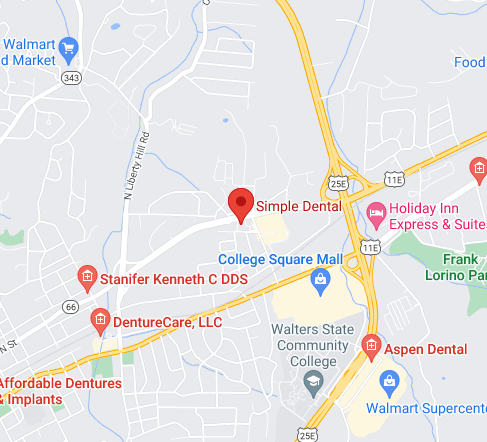
Accidents require fast, decisive action from a supportive clinical team that prioritizes your comfort. Situated at 2104 E Andrew Johnson Hwy directly next to the College Park Walk-In Clinic, Simple Dental serves patients across Panther Creek State Park and regional commuter routes. Our walk-in clinic provides upfront pricing and compassionate care when unexpected trauma occurs. Contact Dr. Joshua Grooms, DDS, and our skilled staff right away for immediate evaluation and tooth preservation.


Leave a Reply
Want to join the discussion?Feel free to contribute!